Data Collection - Labels
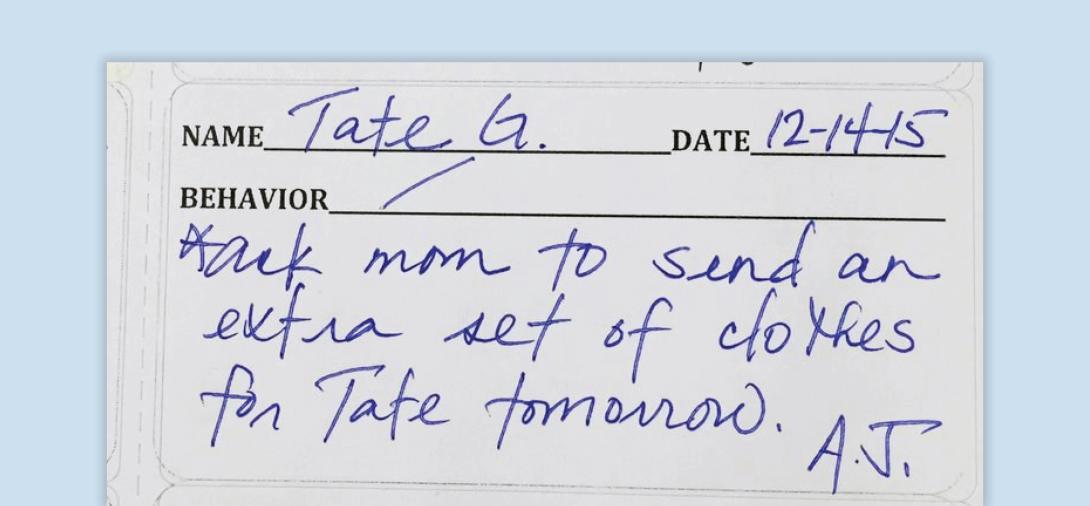
Data is taken on labels and then moved to a tracking sheet at a convenient time.
When to Use
- To track student behaviors or skills in fast-paced or high-demand classroom settings
- During busy or transitional periods (e.g., lunch, recess or transitions between activities)
- For behaviors or skills that occur throughout the day
- When various types of data (e.g., frequency, duration, or skill acquisition) need to be recorded
- To monitor intervention effectiveness or identify areas that need adjustment
How to Use
- Set Up Materials - Ensure labels include fields for essential information such as name, date, target behavior, and any specific data type.
- Collect Data - Record tallies, timestamps or notes on the label each time the behavior or skill occurs.
- Review Data for Completeness - Ensure that all required information has been filled out.
- Transfer Data - At the end of the observation period, peel the label and attach it to the student’s data collection sheet or log.
- Analyze Trends Regularly - Periodically review the collected labels to analyze behavior trends, evaluate progress towards goals, or identify areas requiring additional support or intervention.
Tips for Consistent Label Use
- Attach a pen or marker directly to each clipboard to ensure tools are always ready.
- Use color-coded clipboards or labels for specific students, behaviors or data categories.
- Pre-fill common fields like date or student name to save time during busy moments.
- Schedule time each day to transfer data labels to tracking sheets to maintain consistency.
Variations
- Sticky Notes Alternative - Use sticky notes as a substitute for labels if they are more readily available. Follow the same process of transferring the notes to the tracking sheet.
- Pre-Printed Labels - Create labels customized for specific behaviors or skills (e.g., “Task Completion,” “Social Interaction”) to streamline data collection.
- Combination Tools - Use labels alongside other data tools such as visual charts, timers, or digital tracking systems for a more comprehensive data collection strategy.
Related Tools

Autism, Behavior
Data Collection - Masking Tape
Masking tape can be placed on the leg for an on-the-move solution to taking data.
View Tool/Template

Autism, Behavior
Data Collection - Pocket Transfer
Use your pockets and small objects like paperclips or pennies to take easy, on-the-move data.
View Tool/Template
Autism, Behavior
Data Collection - Sticky Notes
Data is taken on sticky notes, then moved to a tracking sheet at a time that’s convenient for you.
View Tool/Template