Family/Teacher Communication Form
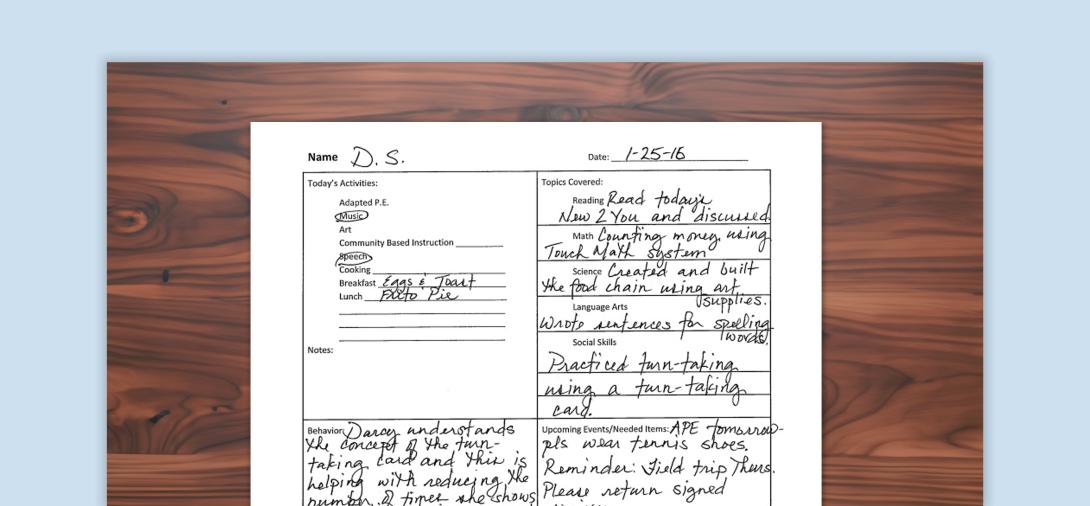
Family/teacher communication forms facilitate regular, meaningful exchanges between home and school, helping ensure students receive consistent support in both environments.
When to Use
- For students who struggle with verbal communication - Ensures families are informed about daily activities, behaviors and progress.
- To Strengthen School-Home Collaboration - Provides insight into both school and home factors that impact learning, behavior and emotional well-being.
- To Track Successes and Challenges - Helps teachers and families celebrate milestones, reinforce positive behaviors, and address concerns early.
- To Monitor Health, Routines, or Transitions - Allows families to share important updates (e.g., changes in sleep, medication, family circumstances).
- As Part of a Daily Take - Home or Digital Communication System - Ensures messages consistently reach home and are returned for teacher review.
How to Use
- Identify Key Information to Share - Prioritize the most important updates for families (e.g., daily schedule, behavior trends, academic progress, special achievements).
- Develop a Communication Format
- Paper Forms: Print double-sided or divided forms so both teacher and family can contribute.
- Digital Form: Use district-approved platforms (e.g., Class Dojo, Remind, Google Forms) for seamless communication.
- Create a Routine for Form Completion and Exchange - Schedule dedicated time for filling out the form during the school day.
- Encourage Positive and Constructive Communication - Regularly include celebrations and student successes, not just concerns.
Tips
- Consistency is Key - Daily use provides more insights into student well-being and performance trends.
- Make it Personalized - Adapt the form to fit each student’s unique needs (e.g., adding visuals for non-readers).
- Be Concise, but Informative - Keep messages clear and actionable to encourage engagement from both teachers and families.
- Encourage Two-Way Communication - Remind families that their input is valued and helps shape better support strategies.
Variations:
- Themed Weekly Updates - Focus on different communication topics each week (e.g., social interactions, academic highlights, emotional well-being).
- Emoji-Based Forms - Use simple visuals for students who struggle with verbal expression (e.g., 🙂, 😣, 😁 to rate their day).
- Video or Audio Updates - For students who benefit from multi-modal communication, teachers can record short updates through approved digital platforms.