Behavior Cue Cards
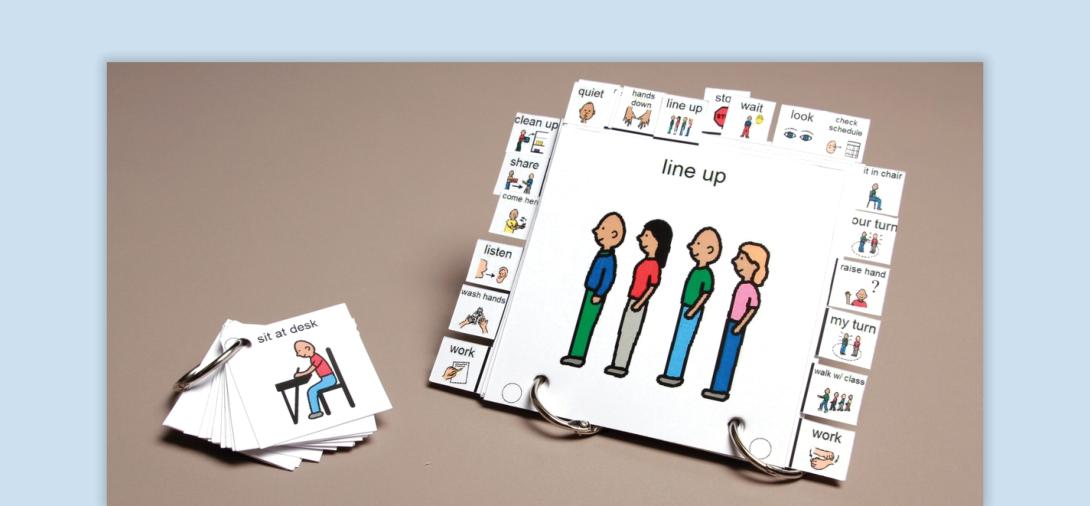
Visual reminders of behaviors may help to reinforce or replace verbal directions or prompts.
When to Use:
- Replace or reinforce verbal directions.
- Quickly and quietly redirect a student.
- Support transitions between activities.
- Encourage independent work.
- Teach and reinforce social skills.
- Promote emotional regulation.
- Establish expectations during group activities.
- Assist students with limited verbal communication.
- Reinforce routines and schedules.
How to Use:
- Introduce the Behavior Cue Card - Clearly explain what the card represents, model the expected behavior, and provide guided practice with positive reinforcement to support learning.
- Use Behavior Cue Cards to Visually Reinforce Verbal Directions - Pair the visual cue with verbal instructions to enhance understanding.
- Ensure the Student Can See the Cue Card Clearly - Consider the student’s visual processing needs - larger print, high contrast colors, or digital formats may be helpful.
- Offer Nonverbal Reminders to Prompt Behavior - Use cue cards silently to redirect behaviors without disrupting the class.
- Be Consistent in Implementation - Use the same Behavior Cue Cards consistently across different routines and settings.
- Adapt Behavior Cue Cards to Fit Individual Student Needs - Customize the language, visuals, and size to match the student’s developmental level and preferences.
- Monitor Effectiveness and Adjust as Needed - Collect data on how often the cards are used and their effectiveness in promoting behavior change.
- Reinforce Positive Responses to the Cue Card - Use immediate and meaningful reinforcement, such as verbal praise or a preferred reward.
- Generalize the Use Across Environment - Practice using cue cards in multiple settings (e.g., classroom, lunchroom, playground).
- Encourage Self-Regulation and Independence - Foster autonomy by gradually shifting responsibility to the student for their own behavior cues.
Tips:
- Ensure the student has the foundational skill before using the cue card- A visual cue is most effective when a student has already been taught the desired behavior.
- Clarify what the desired behavior “looks like” and “sounds like” for each student - Behavior expectations should be individualized. Sitting in a seat might mean having their feet on the floor and their hands in their lap for one student, while another may need movement options such as a fidget tool.
- Model and practice using the cue cards in a structured setting - Introduce cue cards during low-demand times to ensure the student understands their meaning and use.
- Use reinforcement to build positive associations with behavior cue cards - When students respond appropriately to a cue, provide immediate, meaningful reinforcement (e.g., praise, a token, or a preferred activity).
- Be consistent in when and how cue cards are presented - Visuals should be used in the same way across settings and by different staff members to provide predictability.
- Pair visuals with verbal instructions, then gradually fade verbal prompts - Over time, reduce verbal prompts to encourage independent response to visual supports.
- Choose the right format and presentation style for the student - Adapt the presentation to their sensory preferences.
- Provide opportunities for generalization across different settings - Teach students to use behavior cue cards in various environments (e.g., classroom, cafeteria, playground) to help them transfer the skill across contexts.
- Monitor and adjust based on student progress - Regularly assess whether the cue card is effective in promoting the desired behavior.
Related Courses

Autism
Prompting
Discover the power of prompting in skill acquisition. Learn types, systems, implementation steps, and find resources for effective use.
View Course

Autism
Visual Supports
Discover the power of visual supports for supporting students with ASD. Learn about implementation steps, skills, and resources to enhance independence.
View Course