Token Board
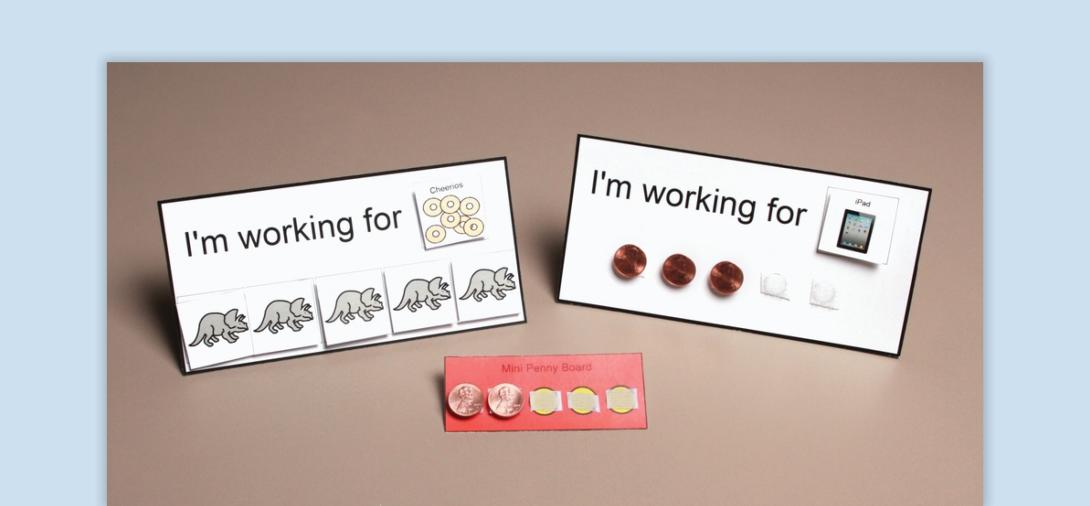
The Token Board shows students their progress toward a reinforcer with tokens earned for completing behavioral or academic tasks. It is an effective tool for motivating students, especially when transitioning from 1-to-1 reinforcement to a more independent system.
When to Use:
- Build Behavioral Momentum - Use when the goal is to encourage the student to continue engaging in appropriate behaviors or tasks.
- Promote Progress Beyond 1-to-1 Reinforcement - Transition from immediate reinforcement to a system that allows students to earn tokens, working toward a bigger reinforcer.
- Increase Engagement - Use with students who are ready to manage their own reinforcement system, which encourages independence and responsibility.
- Encourage Task Completion - Ideal for students who may need extra motivation to complete tasks or who have difficulty staying focused on non-preferred activities.
How to Use:
- Select the Reinforcer - Choose a preferred reinforcer (or allow the student to select one from a choice board). The reinforcer must be motivating enough to keep the student engaged during the task completion process. For older students, you can use items like extra screen time or preferred activities.
- Set the Token Criteria - Decide on the specific behaviors or tasks that will earn tokens (e.g., “sitting at the table,” “completing a worksheet”).
- Provide Tokens - Each time the student performs the desired behavior or completes a task, provide them with a token. Name the behavior (e.g., “Great job sitting at the table!”) and give the student the token to place on the token board. Initially start by setting up the token board with some tokens already placed on it.
- Reinforce with a Larger Reward - When the token board is full, deliver the identified reinforcer (e.g., a preferred snack, extra break time). Then, reset the token board for continued use.
- Gradual Fading - As the student becomes more familiar with the system, start with fewer preloaded tokens. The goal is to eventually start with an empty board and increase the student’s understanding of earning tokens and reinforcement.
- Student Involvement - As the student becomes familiar with the process, allow them to place the tokens on the board themselves. This increases engagement and independence.
Tips:
- Motivating Reinforcer - The token board will only be effective if the reinforcers are genuinely motivating. Conduct preference assessments regularly to ensure the student is still interested in the reward.
- Attainable Goals - Ensure that the tasks required to earn tokens are within the student’s ability level. Tasks that are too difficult or lengthy may lower the student’s motivation to engage in the activity.
- No Token Removal - Never remove tokens for inappropriate behavior. Instead prompt the student with alternative, appropriate behavior that will earn them a token.
- Increase Reinforcement During Challenging Tasks - To build behavioral momentum, increase the rate of reinforcement (e.g., more frequent token earning) during difficult tasks or challenging behavior moments.
Variations:
- For Older Students - Use letters or words to spell out the desired reinforcer. For example, each token could represent a letter in the word “SNACK” or “BREAK” instead of a simple token.
- Interest-Based Tokens - Customize tokens or token boards with the student’s personal interests. For example, use images of favorite characters, sports teams, or hobbies as tokens.
- Digital Token Board - If appropriate for the student, use a digital token board on a tablet or computer to track progress.
Related Courses

Autism
Reinforcement
Discover the power of reinforcement in behavior analysis. Learn types, assessment methods, implementation steps, and find resources for effective use.
View Course

Autism
Visual Supports
Discover the power of visual supports for supporting students with ASD. Learn about implementation steps, skills, and resources to enhance independence.
View Course